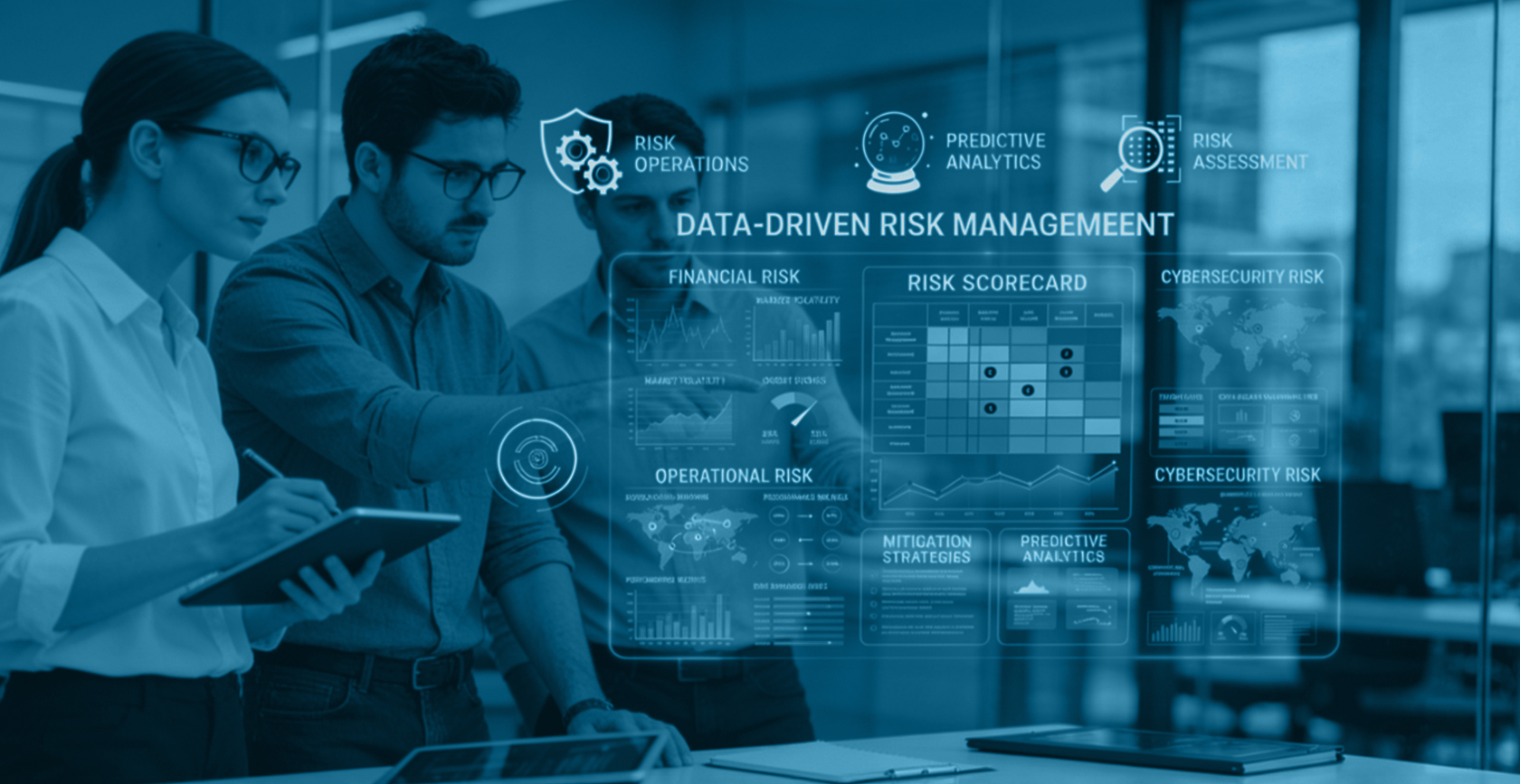
The rapid advancement of data analytics and digital technologies has transformed how businesses approach decision-making. Organizations now have access to vast amounts of data, but the real value lies in how effectively that data is used.
Modern company data analytics capabilities, combined with business data intelligence, enable organizations to turn raw information into actionable insights. Company data and risk analytics help businesses reduce uncertainty by providing real-time insights, predictive risk identification, and data-driven decision support. They enable organizations to assess risk accurately, improve decision-making, and respond proactively to changing market conditions.
What is Company Data in Business Decision-Making?
Company data refers to structured information about an organization’s financial health, operational performance, payment behavior, ownership structure, and market presence. It may include internal data such as sales performance and external data such as credit reports or industry benchmarks.
In decision-making, this data acts as a foundation for evaluating performance, identifying inefficiencies, and assessing potential partnerships. Businesses use it to move from assumptions to evidence-based strategies, often powered by corporate data insights, ensuring decisions are backed by measurable intelligence rather than guesswork.
How does risk analytics improve business decisions?
Risk analytics applies statistical models, predictive techniques, and data visualization tools to identify, assess, and prioritize risks. Instead of reacting after a problem occurs, businesses can anticipate potential challenges and take preventive action.
For example, analyzing payment trends can help identify customers likely to default, while operational data can reveal inefficiencies that may lead to losses. Using an advanced risk data analytics platform, businesses can centralize insights and enhance decision accuracy while reducing exposure to unexpected disruptions.
What is data-driven risk management in enterprises, and why is it important?
Data-driven risk management involves using real-time data and analytics to continuously monitor and mitigate risks across business functions. It replaces manual, reactive methods with automated, insight-driven processes.
This approach is critical because it enables faster decision-making, improves transparency, and ensures that risks are identified early. In large enterprises, where decisions involve multiple stakeholders and high financial stakes, enterprise risk analytics ensures consistency, scalability, and reliability.
What is the role of business intelligence in reducing uncertainty?
Business intelligence tools transform complex datasets into clear, visual insights through dashboards and reports. These tools help decision-makers quickly understand trends, detect anomalies, and evaluate performance metrics.
By leveraging business data intelligence, organizations gain a unified view of operations, reducing uncertainty and enabling leaders to make timely, informed decisions based on real-time data.
How do companies use company data to assess risk?
Companies analyze key indicators such as financial ratios, credit scores, payment history, and operational performance to assess risk. External data sources are often combined with internal data to create a comprehensive risk profile.
This process often includes business data verification, ensuring that the information used is accurate, reliable, and up to date. This holistic approach allows businesses to evaluate the reliability of partners, identify potential threats, and make decisions that minimize financial and operational exposure.
How Can Risk Analytics Support Strategic Planning?
Risk analytics enables businesses to evaluate multiple scenarios and forecast potential outcomes before making strategic decisions. By understanding the risks associated with each option, companies can choose strategies that align with their risk tolerance and long-term goals.
This approach improves planning accuracy and ensures that growth strategies are both ambitious and sustainable, especially when supported by enterprise risk analytics frameworks.
What types of risks can be identified using company data?
Company data helps identify a wide range of risks, including financial risk, credit risk, operational risk, supplier risk, and compliance risk. For example, financial data can highlight liquidity issues, while supplier data can reveal dependency risks.
Using company data analytics, businesses can detect patterns and signals that indicate potential vulnerabilities early, enabling proactive mitigation strategies.
How does predictive analytics reduce business uncertainty?
Predictive analytics uses historical data and machine learning models to forecast future trends and risks. By identifying patterns and correlations, businesses anticipate potential challenges before they occur.
This forward-looking approach, powered by corporate data insights, reduces uncertainty by providing a clearer picture of what lies ahead, enabling proactive decision-making.
What is the difference between risk analytics and business analytics?
Business analytics focuses on improving performance and identifying growth opportunities, while risk analytics specifically targets potential threats and vulnerabilities.
Although both rely on company data analytics, their objectives differ. Together, they provide a balanced approach to decision-making by combining growth insights with risk awareness.
How can businesses integrate risk analytics into decision-making processes?
Businesses can integrate risk analytics by embedding it into core systems such as ERP and CRM platforms. This ensures that risk insights are available at every stage of the decision-making process.
Additionally, organizations should establish data governance frameworks, adopt a risk data analytics platform, train teams on analytics tools, and create workflows that prioritize data-driven decisions.
Real-World Applications of Company Data in Risk Management
How do companies use data analytics to reduce financial risk?
Companies use financial data analytics to monitor cash flow, evaluate creditworthiness, and detect early signs of financial instability. By analyzing trends and anomalies, they can prevent losses and maintain financial stability.
This is particularly important in B2B environments where enterprise risk analytics plays a critical role in managing large transactions and extended credit cycles.
How can company data improve supplier risk management?
Supplier data provides insights into vendor reliability, financial health, and compliance status. Businesses can use this information to select trustworthy suppliers and avoid disruptions in the supply chain.
Continuous monitoring supported by business data intelligence helps organizations respond quickly to emerging risks.
How does data help in identifying high-risk business partners?
Data analysis can reveal warning signs such as delayed payments, declining financial performance, or legal issues. These indicators help businesses identify high-risk partners before entering into agreements.
With business data verification, companies ensure that partner information is accurate and trustworthy, reducing the likelihood of financial losses.
How can risk analytics prevent fraud in B2B transactions?
Risk analytics detects unusual patterns and anomalies in transaction data, which may indicate fraudulent activity. By using advanced algorithms and monitoring systems, businesses can identify suspicious behavior in real time.
A centralized risk data analytics platform strengthens fraud detection capabilities and protects both financial assets and reputation.
What role does company data play in credit risk assessment?
Company data is essential for evaluating creditworthiness. It includes financial performance, payment history, and external credit ratings.
Businesses use this data along with corporate data insights to determine credit limits, set payment terms, and decide whether to extend credit, ensuring a balanced approach between growth and risk.
What Tools are Used for Risk Analytics in Businesses?
Businesses rely on advanced data and analytics platforms that combine business intelligence, predictive modeling, and integrated risk management capabilities.
Solutions from Dun & Bradstreet, such as D&B Finance Analytics and D&B Risk Analytics, leverage company data analytics and enterprise risk analytics to provide access to reliable company data, credit insights, and predictive risk indicators.
These tools enable organizations to collect, analyze, and visualize data in real time, helping them assess partner risk, monitor financial health, and make informed decisions.
What is real-time data analytics in risk management?
Real-time analytics provides immediate insights into ongoing operations, allowing businesses to respond quickly to emerging risks. Instead of relying on historical reports, decision-makers can act on current data.
This capability is critical in dynamic environments where delays in response can lead to significant losses.
How can businesses implement data analytics frameworks?
Implementing a data analytics framework involves centralizing data sources, adopting the right tools, and establishing clear processes for data analysis.
Organizations should also invest in skilled professionals and ensure that data governance policies are in place to maintain accuracy and consistency, especially when scaling data-driven risk management practices.
What are the best practices for using company data effectively?
Best practices include maintaining high data quality, ensuring data security, and using reliable sources. Businesses should also integrate analytics into daily operations and continuously update their models to reflect changing conditions.
Leveraging corporate data insights ensures that data remains relevant, actionable, and aligned with business goals.
How Does Data-Driven Decision-Making Reduce Uncertainty?
Data-driven decision-making replaces assumptions with measurable insights. By relying on accurate data, businesses can reduce ambiguity and make decisions with greater confidence.
This approach, powered by company data analytics, leads to more predictable outcomes and improved strategic alignment.
What are the benefits of using company data in risk management?
Using company data enhances risk visibility, improves compliance, and enables faster decision-making. It also helps businesses identify opportunities while minimizing potential threats.
These benefits are amplified when organizations leverage enterprise risk analytics and business data intelligence together.
How does risk analytics improve operational efficiency?
Risk analytics streamlines processes by identifying inefficiencies and optimizing resource allocation. It reduces manual effort and ensures that operations run smoothly.
This results in cost savings and improved productivity.
Can data analytics increase business profitability?
Yes, data analytics helps businesses identify cost-saving opportunities, optimize pricing strategies, and improve customer targeting. By reducing risks and enhancing efficiency, it directly contributes to higher profitability.
How do insights from company data drive competitive advantage?
Companies that leverage data effectively can respond faster to market changes, identify emerging trends, and make informed decisions ahead of competitors. This agility provides a significant competitive edge in today’s dynamic business environment.
Advanced Insights and Challenges in Risk Analytics Adoption
How can businesses use company data and risk analytics to make better decisions?
By combining internal and external data sources, businesses gain a comprehensive understanding of risks and opportunities. This holistic view supports more accurate and balanced decision-making.
What is the impact of predictive risk analytics on business growth?
Predictive analytics enables businesses to identify growth opportunities while minimizing risks. It supports smarter investments and sustainable expansion strategies.
How do data insights help in reducing market uncertainty?
Data insights provide visibility into market trends, customer behavior, and economic conditions. This helps businesses plan effectively and adapt to changes with confidence.
How can SMEs leverage company data for risk management?
SMEs can adopt scalable analytics tools to monitor risks without significant investment. These tools provide valuable insights that support growth and stability.
What are the challenges in implementing risk analytics in organizations?
Common challenges include data silos, lack of expertise, integration issues, and resistance to change. Addressing these challenges requires strong leadership and a clear data strategy.
Key Takeaways
- Company data enables informed, evidence-based decisions, reducing reliance on assumptions
- Risk analytics helps identify and mitigate potential threats before they impact business operations
- Predictive insights allow businesses to anticipate risks and plan proactively
- Real-time analytics improves decision speed and responsiveness to changing conditions
- Integrating data into workflows enhances efficiency, accuracy, and consistency
- Businesses that leverage data effectively gain a strong competitive advantage in dynamic markets
Conclusion
For organizations operating in complex B2B ecosystems, decision-making requires a clear understanding of risk across partners, markets, and financial environments. Without reliable data, businesses often rely on assumptions, increasing exposure to uncertainty.
Company data and risk analytics provide the visibility needed to make confident decisions. By combining real-time insights and predictive intelligence, businesses can assess risk accurately, ensure compliance, and improve efficiency across operations.
With solutions from Dun & Bradstreet, organizations can move from reactive risk management to a proactive, data-driven approach. Transform your decision-making with trusted insights and a smarter approach to managing risk.
FAQs
Q: What data is used in business risk analysis?
A: Business risk analysis uses financial data, credit history, payment behavior, operational metrics, and market intelligence to evaluate potential risks. It may also include supplier data, compliance records, and industry benchmarks to provide a more comprehensive risk assessment.
Q: What is risk analytics in simple terms?
A: Risk analytics is the use of data and models to identify, assess, and predict potential risks so businesses can make proactive decisions. It helps organizations move from reactive problem-solving to forward-looking risk management.
Q: Why should businesses invest in data analytics tools?
A: These tools help uncover insights, improve efficiency, and reduce risks by enabling data-driven decision-making. They also allow businesses to process large volumes of data quickly and respond faster to changing conditions.
Q: How do analytics tools help in decision-making?
A: They convert raw data into actionable insights through dashboards, reports, and predictive models, enabling informed decisions. This improves accuracy, speeds up decision-making, and reduces reliance on assumptions.
Q: What are the key benefits of using company data for business growth?
A: Key benefits include improved risk management, better customer and partner targeting, enhanced operational efficiency, and stronger strategic planning. It also helps businesses identify new opportunities and maintain a competitive edge.
Q: How can data intelligence improve risk management strategies?
A: Data intelligence provides real-time insights and predictive analysis, enabling businesses to identify risks early and respond effectively. It also supports continuous monitoring, helping organizations adapt quickly to new risks and market changes.